Additional information
| Full Title | Electronic Institutions Applications to uHelp, WeCurate and PeerLearn |
|---|---|
| Author(s) | |
| Edition | |
| ISBN | 9783319656052, 9783319656045 |
| Publisher | Springer |
| Format | PDF and EPUB |

Original price was: $89.00.$24.99Current price is: $24.99.
Access Electronic Institutions Applications to uHelp, WeCurate and PeerLearn Now. Discount up to 90%
Before checkout, confirm the ISBN, author, publisher, and edition match your course requirements. Secure payment and support are available at support@textbookfind.com.
| Full Title | Electronic Institutions Applications to uHelp, WeCurate and PeerLearn |
|---|---|
| Author(s) | |
| Edition | |
| ISBN | 9783319656052, 9783319656045 |
| Publisher | Springer |
| Format | PDF and EPUB |
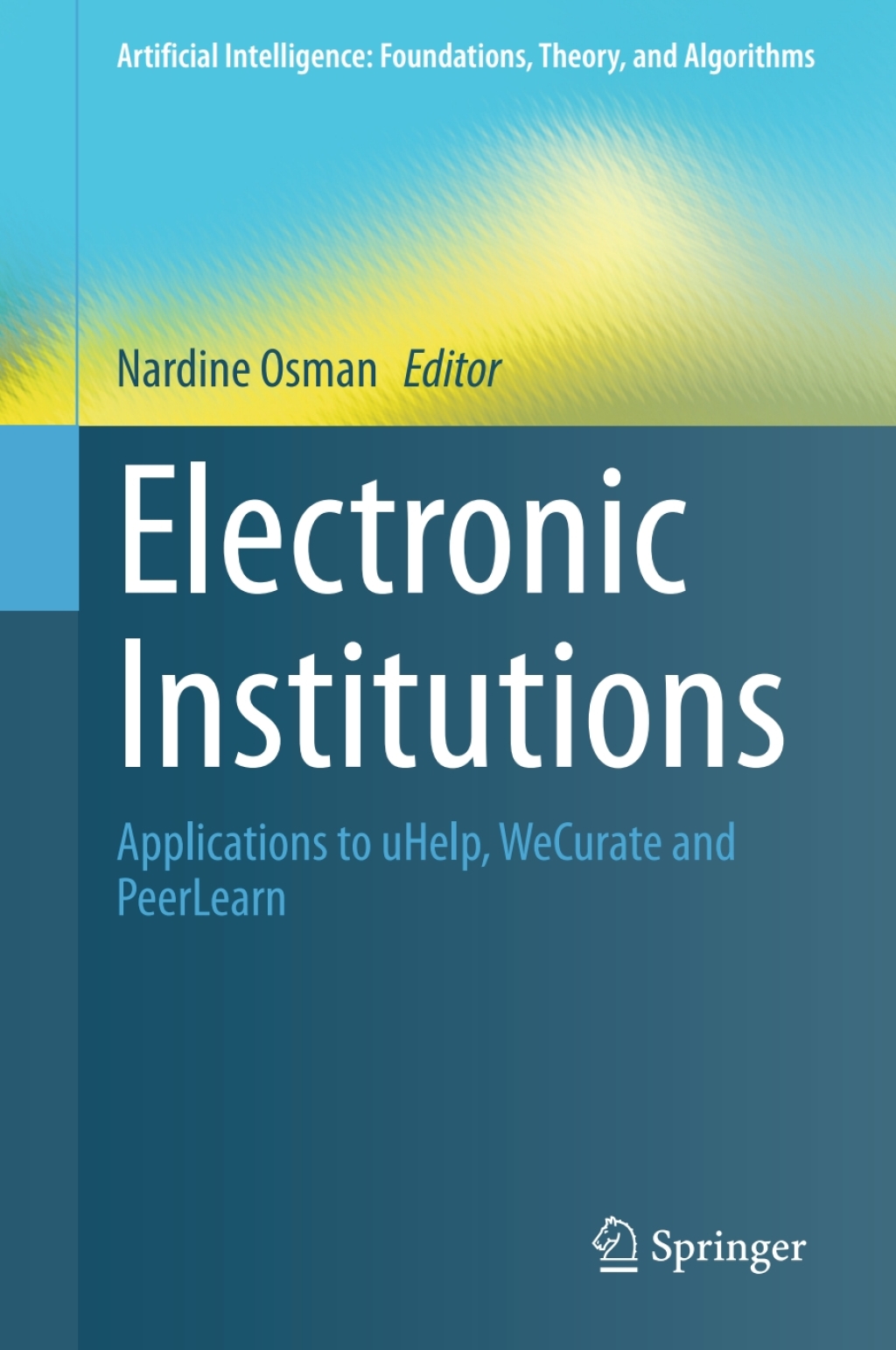
This book introduces the concept of Electronic Institutions (EIs), where complex interactions between human or software agents are governed by specified rules, mirroring those found in human organisations. As such, the readers will gain insight into how electronic institutions facilitate autonomous agent interactions while ensuring compliance with predefined rules. The book extends beyond theoretical concepts, offering practical applications in real-life scenarios. Through detailed case studies, such as the uHelp, WeCurate, and PeerLearn platforms, readers understand how electronic institutions may be specified to regulate interactions within mixed human/software agent communities. From coordinating volunteer efforts with a social network, to collectively curating museum exhibits online, and facilitating collaborative learning in an online classroom setting, these applications exemplify the versatility and efficacy of electronic institutions in diverse contexts. The book also discusses PeerFlow, a system designed and built for peer-to-peer electronic institutions that provides an intuitive user interface allowing nontechnical users to specify and share institutions. Featuring contributions from leading researchers in the areas of agent technologies and artificial intelligence, the book will be useful for postgraduates, researchers, and practitioners in these domains.