Additional information
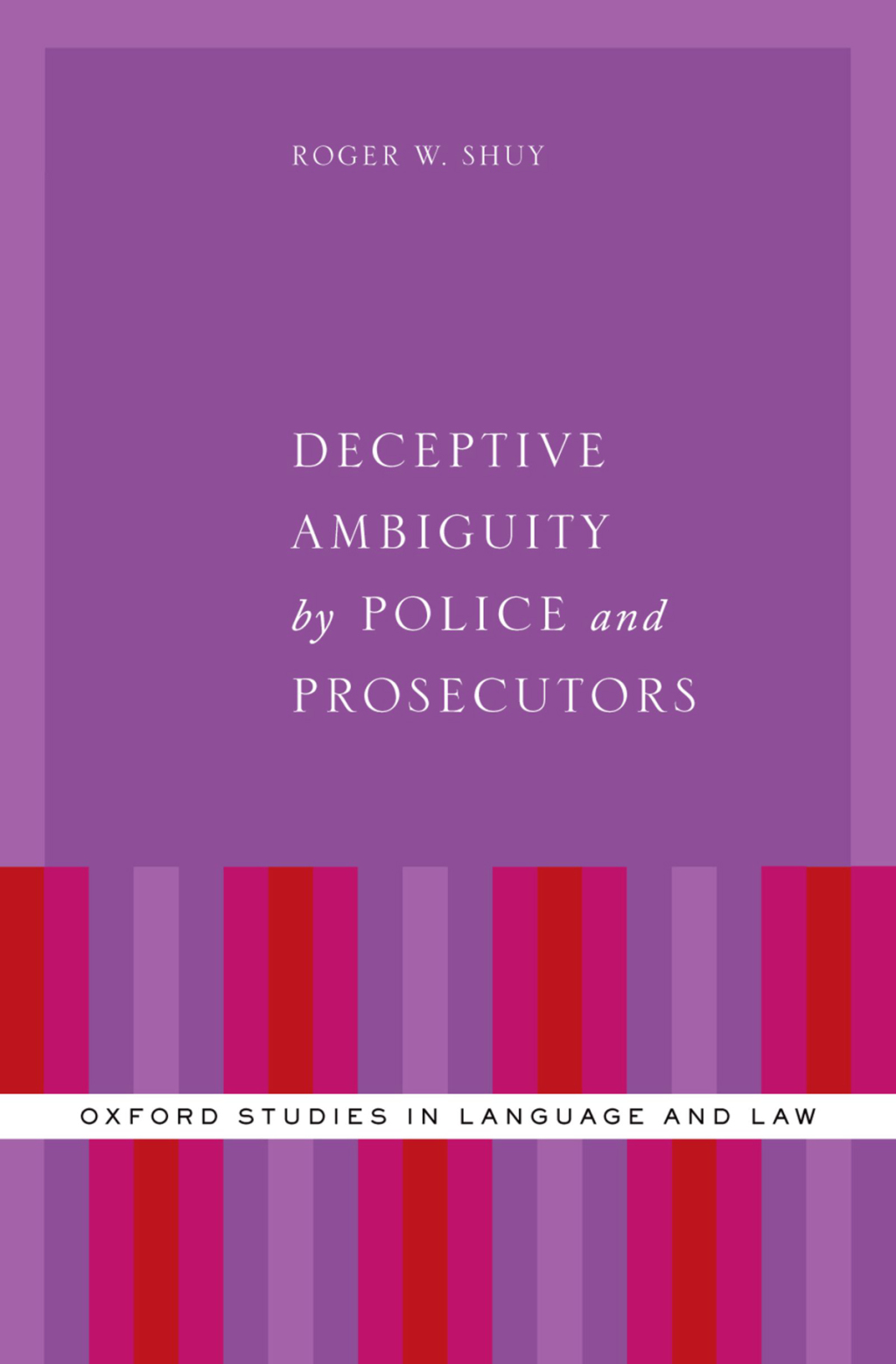
| Full Title | Deceptive Ambiguity by Police and Prosecutors |
|---|---|
| Author(s) | Roger W. Shuy |
| Edition | |
| ISBN | 9780190669911, 9780190669898, 9780190669904 |
| Publisher | Oxford University Press |
| Format | PDF and EPUB |

Original price was: $88.89.$24.99Current price is: $24.99.
Access Deceptive Ambiguity by Police and Prosecutors Now. Discount up to 90%
Before checkout, confirm the ISBN, author, publisher, and edition match your course requirements. Secure payment and support are available at support@textbookfind.com.
| Full Title | Deceptive Ambiguity by Police and Prosecutors |
|---|---|
| Author(s) | Roger W. Shuy |
| Edition | |
| ISBN | 9780190669911, 9780190669898, 9780190669904 |
| Publisher | Oxford University Press |
| Format | PDF and EPUB |
Much has been written about how criminal suspects, defendants, and the targets of undercover operations employ ambiguous language as they interact with the legal system. This book examines the other side of the coin, describing fifteen criminal investigations that demonstrate how police, prosecutors, and undercover agents use deceptive ambiguity with their subjects and targets, thereby creating misrepresentations through their uses of speech events, schemas, agendas, speech acts, lexicon, and grammar. This misrepresentation also can strongly affect the perceptions of later listeners, such as judges and juries, about the subjects’ motives, predispositions, intentions, and voluntariness. Deception is commonly considered intentional while ambiguity is often excused as unintentional, in line with Grice’s maxim of sincerity in his cooperative principle. Most of the interactions of suspects, defendants, and targets with representatives of law enforcement, however, are oppositional, adversarial, and non-cooperative events that provide the opportunity for participants to stretch, ignore, or even violate the cooperative principle. One effective way law enforcement does this is by using ambiguity. Suspects and defendants may hear such ambiguous speech and not recognize the ambiguity and therefore react in ways that they may not have understood or intended. The fifteen case studies in this book illustrate how deceptive ambiguity, whether intentional or not, is used as commonly by police, prosecutors and undercover agents as it is by suspects and defendants.