Additional information
| Full Title | Game Theory: Mathematical Models of Conflict |
|---|---|
| Author(s) | Jones, A. J. |
| Edition | |
| ISBN | 9781898563143, 9780857099693 |
| Publisher | Woodhead Publishing |
| Format | PDF and EPUB |

Original price was: $95.00.$24.99Current price is: $24.99.
Access Game Theory: Mathematical Models of Conflict Now. Discount up to 90%
Before checkout, confirm the ISBN, author, publisher, and edition match your course requirements. Secure payment and support are available at support@textbookfind.com.
| Full Title | Game Theory: Mathematical Models of Conflict |
|---|---|
| Author(s) | Jones, A. J. |
| Edition | |
| ISBN | 9781898563143, 9780857099693 |
| Publisher | Woodhead Publishing |
| Format | PDF and EPUB |
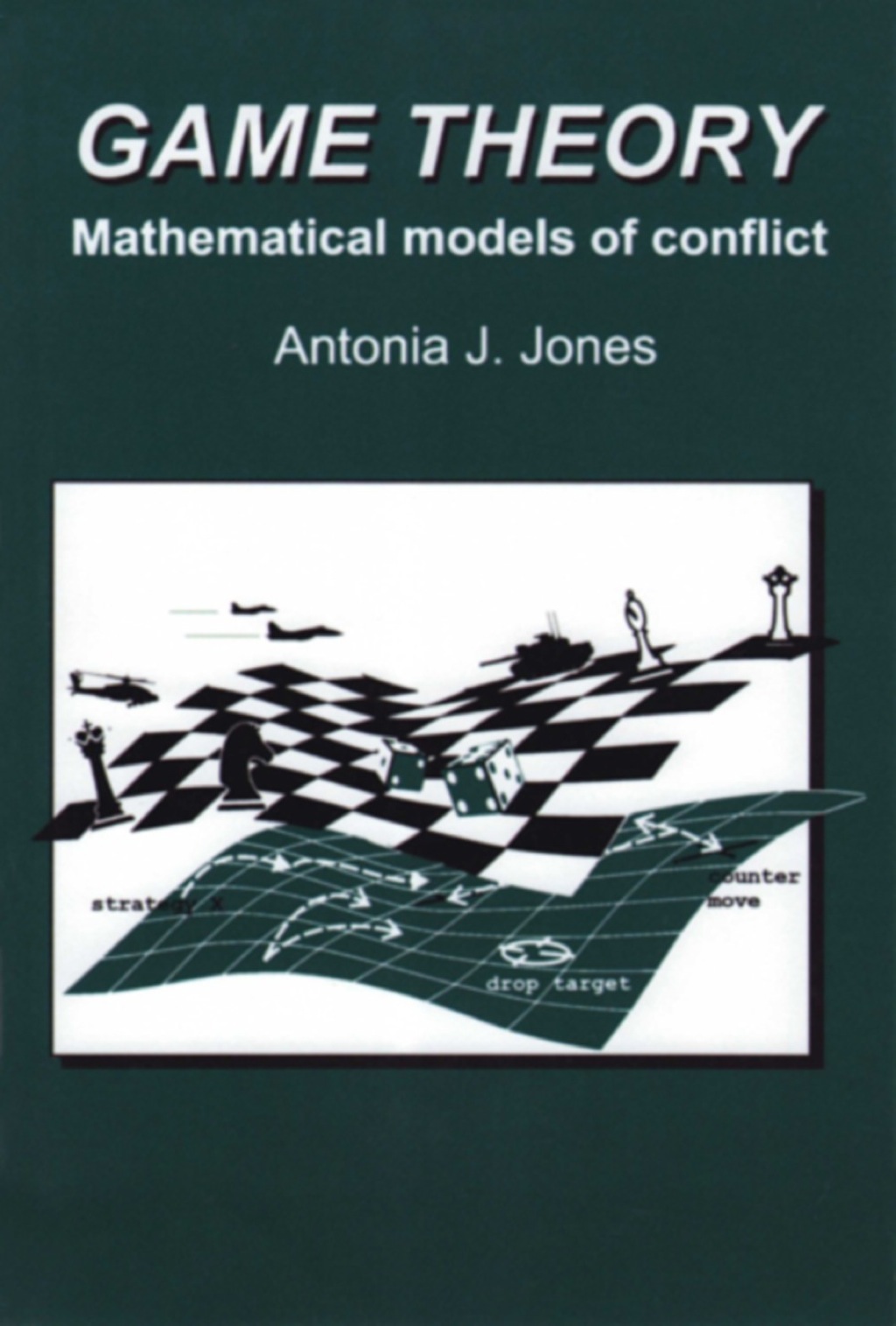
Written engagingly and with agreeable humour, this book balances a light touch with a rigorous yet economical account of the theory of games and bargaining models. It provides a precise interpretation, discussion and mathematical analysis for a wide range of “game-like problems in economics, sociology, strategic studies and war.
There is first an informal introduction to game theory, which can be understood by non-mathematicians, which covers the basic ideas of extensive form, pure and mixed strategies and the minimax theorem. The general theory of non-cooperative games is then given a detailed mathematical treatment in the second chapter. Next follows a “first class account of linear programming, theory and practice, terse, rigorous and readable, which is applied as a tool to matrix games and economics from duality theory via the equilibrium theorem, with detailed explanations of computational aspects of the simplex algorithm.
The remaining chapters give an unusually comprehensive but concise treatment of cooperative games, an original account of bargaining models, with a skillfully guided tour through the Shapley and Nash solutions for bimatrix games and a carefully illustrated account of finding the best threat strategies.