Additional information
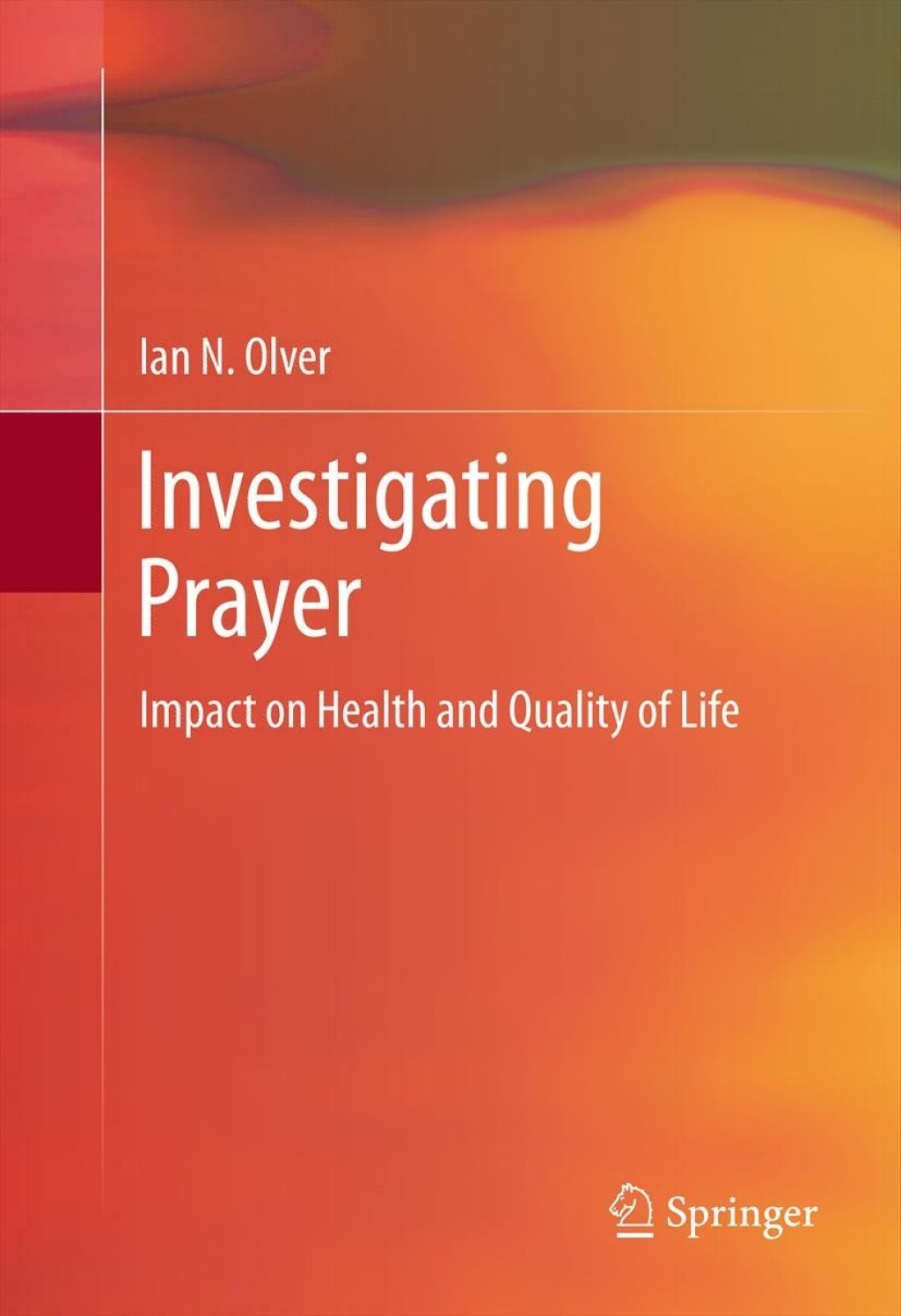
| Full Title | Investigating Prayer Impact on Health and Quality of Life |
|---|---|
| Author(s) | Ian Olver |
| Edition | |
| ISBN | 9781461445715, 9781461445708, 9781493900787 |
| Publisher | Springer |
| Format | PDF and EPUB |

Original price was: $99.00.$24.99Current price is: $24.99.
Access Investigating Prayer Impact on Health and Quality of Life Now. Discount up to 90%
Before checkout, confirm the ISBN, author, publisher, and edition match your course requirements. Secure payment and support are available at support@textbookfind.com.
| Full Title | Investigating Prayer Impact on Health and Quality of Life |
|---|---|
| Author(s) | Ian Olver |
| Edition | |
| ISBN | 9781461445715, 9781461445708, 9781493900787 |
| Publisher | Springer |
| Format | PDF and EPUB |
This book relates the experience of researching, planning, and conducting a scientific study into intercessory prayer (prayer for others). The purpose of the study was to ascertain whether the impact of prayer could be measured in a formal study, based on the large number of anecdotal reports of efficacy. The study was a prospectively randomized double-blind trial that added prayer by an established Christian prayer group to conventional therapy for cancer. The unique design feature was that the primary endpoint was a change in a validated scale of spiritual well-being. The patients were informed that they were participating in a study about spiritual well-being and quality of life but remained blinded to the intervention. The initial observation from the baseline data was that spiritual well-being made a unique contribution to quality of life. The final outcome of the study was that there was a statistically significant difference in spiritual well-being favoring the prayer group. Thebackground includes a fascinating review of the medical literature on the topic, which contains positive and negative studies that each attracts a vigorous debate about methodology, endpoints, and whether metaphysical phenomena can or should be studied using scientific methodology. The complementary and alternative medicine literature is also equivocal as to whether prayer, arguably the most common complementary medical therapy, should be included in the range of interventions grouped under that heading. In addition to reporting the background and results of the study, the book explores the reactions of a range of individuals to the trial, all of which help reflect on the nature of prayer.