Description
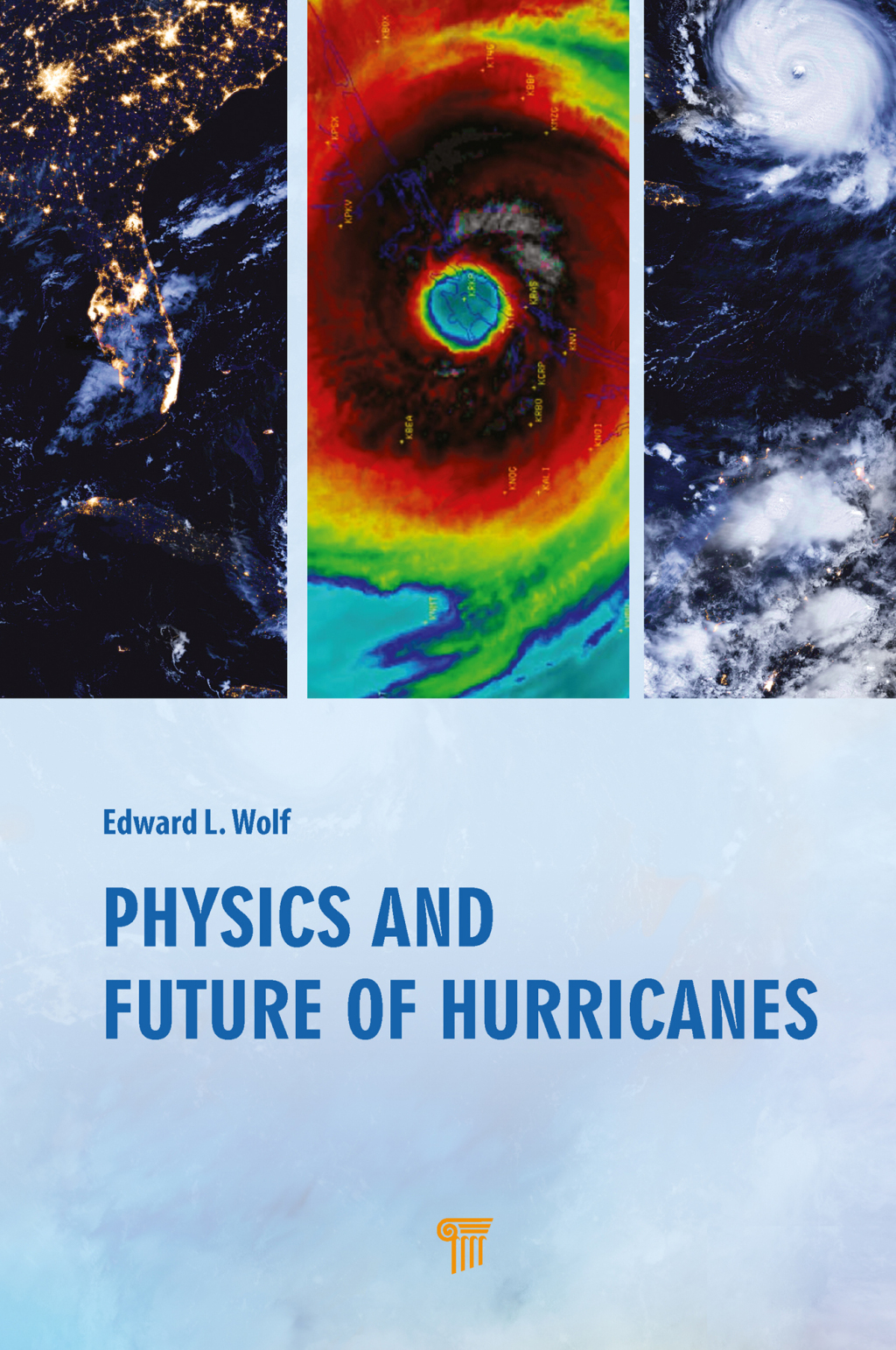
This monograph is about hurricanes, prompted by a discovery that suggests they will become more powerful with global warming. It provides, at a college physics level, a basic understanding of hurricanes emphasizing the flow of energy into and out of these storms and, as a textbook, covers some material that might be taught in meteorology or atmospheric physics courses. The text is centered on a new discovery that is not in any existing textbook. Because of the new discovery, the book is of immediate interest to all meteorologists. It turns out that hurricanes, as revealed by the new discovery, are usefully regarded as a separate phase of matter, bringing in characteristic temperature dependences near their transitions. The role of phase change in understanding hurricanes brings in the 20th-century discoveries in theoretical physics relating to critical phenomena with non-intuitive values of the critical exponent β entering the formula P = const (T – Tc)β, where P is a characteristic strength parameter, or order parameter, of the phase of matter appearing at Tc. According to the new discovery on hurricanes, it appears that taking the wind velocity as the order parameter P, the critical exponent is near 1/3. In a second discovery, we find that a small correction to this value is brought in by the complicated physics of the renormalization group, that earned K. G. Wilson the Nobel Prize in Physics in 1982.