Description
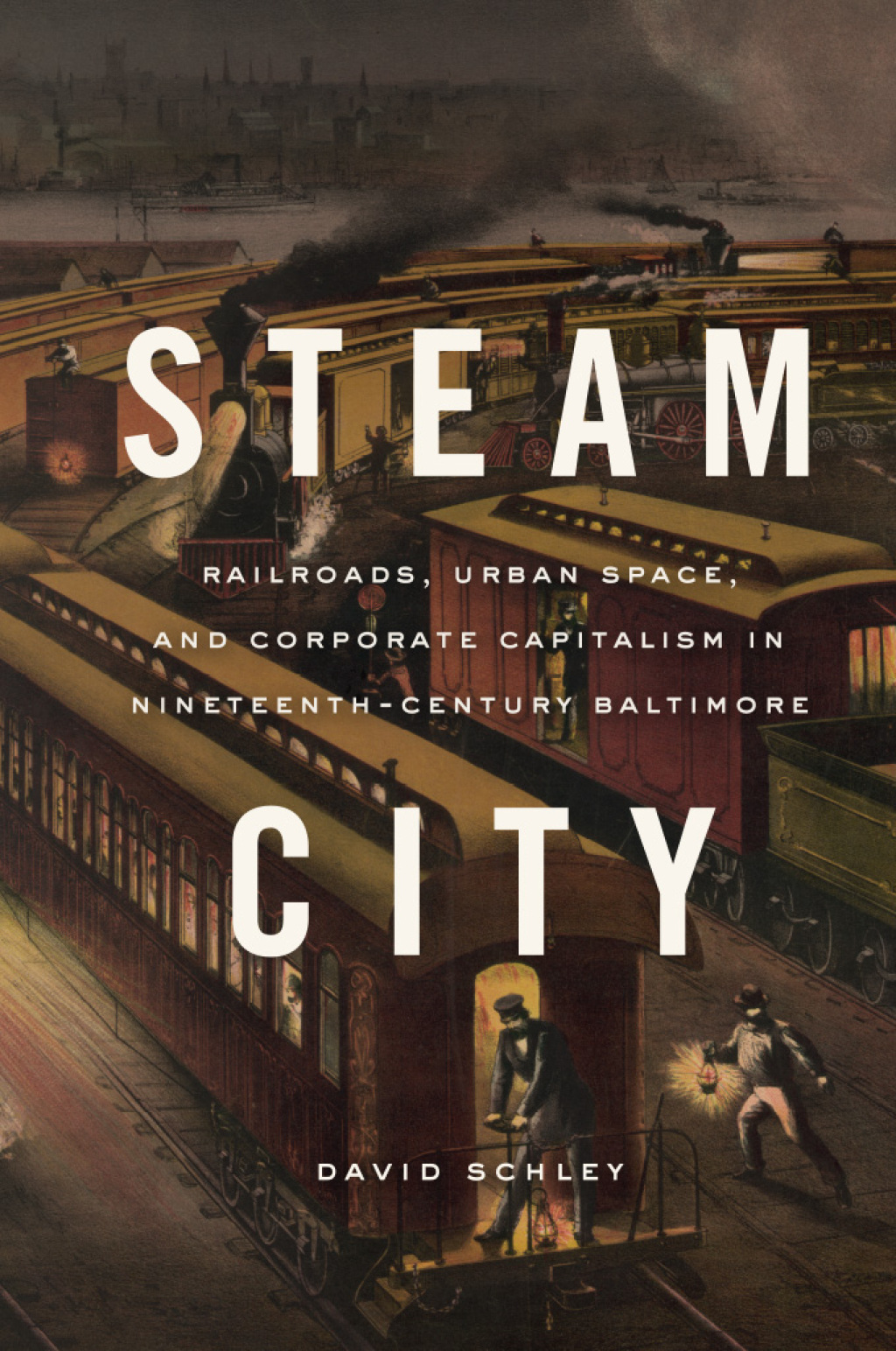
Anyone interested in the rise of American corporate capitalism should look to the streets of Baltimore. There, in 1827, citizens launched a bold new venture: a “rail-road” that would link their city with the fertile Ohio River Valley. They dubbed this company the Baltimore & Ohio Railroad (B&O), and they conceived of it as a public undertaking—an urban improvement, albeit one that would stretch hundreds of miles beyond the city limits. Steam City tells the story of corporate capitalism starting from the street and moving outward, looking at how the rise of the railroad altered the fabric of everyday life in the United States. The B&O’s founders believed that their new line would remap American economic geography, but no one imagined that the railroad would also dramatically reshape the spaces of its terminal city. As railroad executives wrangled with city officials over their use of urban space, they formulated new ideas about the boundaries between public good and private profit. Ultimately, they reinvented the B&O as a private enterprise, unmoored to its home city. This bold reconception had implications not only for the people of Baltimore, but for the railroad industry as a whole. As David Schley shows here, privatizing the B&O helped set the stage for the rise of the corporation as a major force in the post-Civil War economy. Steam City examines how the birth and spread of the American railroad—which brought rapid communications, fossil fuels, and new modes of corporate organization to the city—changed how people worked, where they lived, even how they crossed the street. As Schley makes clear, we still live with the consequences of this spatial and economic order today.