Additional information
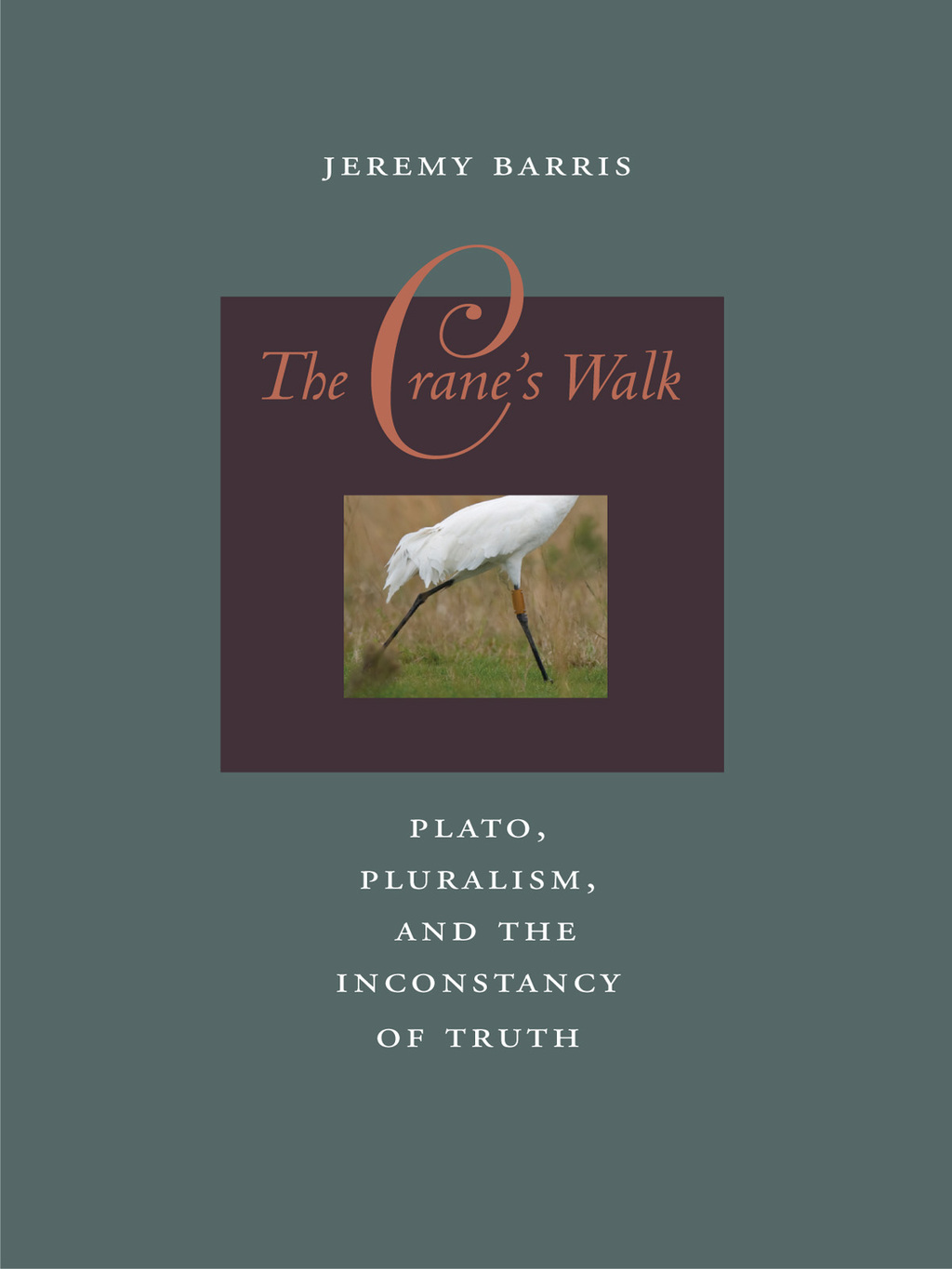
| Full Title | The Crane\'s Walk Plato, Pluralism, and the Inconstancy of Truth |
|---|---|
| Author(s) | Jeremy Barris |
| Edition | |
| ISBN | 9780823229154, 9780823229130 |
| Publisher | Fordham University Press |
| Format | PDF and EPUB |

Original price was: $79.99.$24.99Current price is: $24.99.
Access The Crane’s Walk Plato, Pluralism, and the Inconstancy of Truth Now. Discount up to 90%
Before checkout, confirm the ISBN, author, publisher, and edition match your course requirements. Secure payment and support are available at support@textbookfind.com.
| Full Title | The Crane\'s Walk Plato, Pluralism, and the Inconstancy of Truth |
|---|---|
| Author(s) | Jeremy Barris |
| Edition | |
| ISBN | 9780823229154, 9780823229130 |
| Publisher | Fordham University Press |
| Format | PDF and EPUB |
In The Crane’s Walk, Jeremy Barris seeks to show that we can conceive and live with a pluralism of standpoints with conflicting standards for truth–with the truth of each being entirely unaffected by the truth of the others. He argues that Plato’s work expresses this kind of pluralism, and that this pluralism is important in its own right, whether or not we agree about what Plato’s standpoint is. The longest tradition of Plato scholarship identifies crucial faults in Plato’s theory of Ideas. Barris argues that Plato deliberately displayed those faults, because he wanted to demonstrate that basic kinds of error or illogic have dimensions that are crucial to the establishing of truth. These dimensions legitimate a paradoxical coordination of logically incompatible conceptions of truth. Connecting this idea with emerging currents of Plato scholarship, he emphasizes, in addition to the dialogues’ arguments, the importance of their nonargumentative features, including drama, myths, fictions, anecdotes, and humor. These unanalyzed nonargumentative features function rigorously, as a lever with which to examine the enterprise of rational argument itself, without presupposing its standards or illegitimately assimilating any position to the standards of another. Today, communities are torn apart by conflicts within and between a host of different pluralist and absolutist commitments. The possibility developed in this book-a coordination of absolute and relative truth that allows an understanding of some relativist and some absolutist positions as being fully legitimate and as capable of existing in a relation to their opposites-may contribute to perspectives for resolving these conflicts.
Original price was: $79.99.$24.99Current price is: $24.99.
Access The Crane’s Walk Plato, Pluralism, and the Inconstancy of Truth Now. Discount up to 90%
Before checkout, confirm the ISBN, author, publisher, and edition match your course requirements. Secure payment and support are available at support@textbookfind.com.
| Full Title | The Crane\'s Walk Plato, Pluralism, and the Inconstancy of Truth |
|---|---|
| Author(s) | Jeremy Barris |
| Edition | |
| ISBN | 9780823238354, 9780823229130 |
| Publisher | Fordham University Press |
| Format | PDF and EPUB |
In The Crane’s Walk, Jeremy Barris seeks to show that we can conceive and live with a pluralism of standpoints with conflicting standards for truth–with the truth of each being entirely unaffected by the truth of the others. He argues that Plato’s work expresses this kind of pluralism, and that this pluralism is important in its own right, whether or not we agree about what Plato’s standpoint is. The longest tradition of Plato scholarship identifies crucial faults in Plato’s theory of Ideas. Barris argues that Plato deliberately displayed those faults, because he wanted to demonstrate that basic kinds of error or illogic have dimensions that are crucial to the establishing of truth. These dimensions legitimate a paradoxical coordination of logically incompatible conceptions of truth. Connecting this idea with emerging currents of Plato scholarship, he emphasizes, in addition to the dialogues’ arguments, the importance of their nonargumentative features, including drama, myths, fictions, anecdotes, and humor. These unanalyzed nonargumentative features function rigorously, as a lever with which to examine the enterprise of rational argument itself, without presupposing its standards or illegitimately assimilating any position to the standards of another. Today, communities are torn apart by conflicts within and between a host of different pluralist and absolutist commitments. The possibility developed in this book-a coordination of absolute and relative truth that allows an understanding of some relativist and some absolutist positions as being fully legitimate and as capable of existing in a relation to their opposites-may contribute to perspectives for resolving these conflicts.