Additional information
| Full Title | The Robomobility Revolution of Urban Public Transport A Social Sciences Perspective |
|---|---|
| Author(s) | Author |
| Edition | |
| ISBN | 9783030729769, 9783030729752 |
| Publisher | Springer |
| Format | PDF and EPUB |

Original price was: $149.00.$24.99Current price is: $24.99.
Access The Robomobility Revolution of Urban Public Transport A Social Sciences Perspective Now. Discount up to 90%
| Full Title | The Robomobility Revolution of Urban Public Transport A Social Sciences Perspective |
|---|---|
| Author(s) | Author |
| Edition | |
| ISBN | 9783030729769, 9783030729752 |
| Publisher | Springer |
| Format | PDF and EPUB |
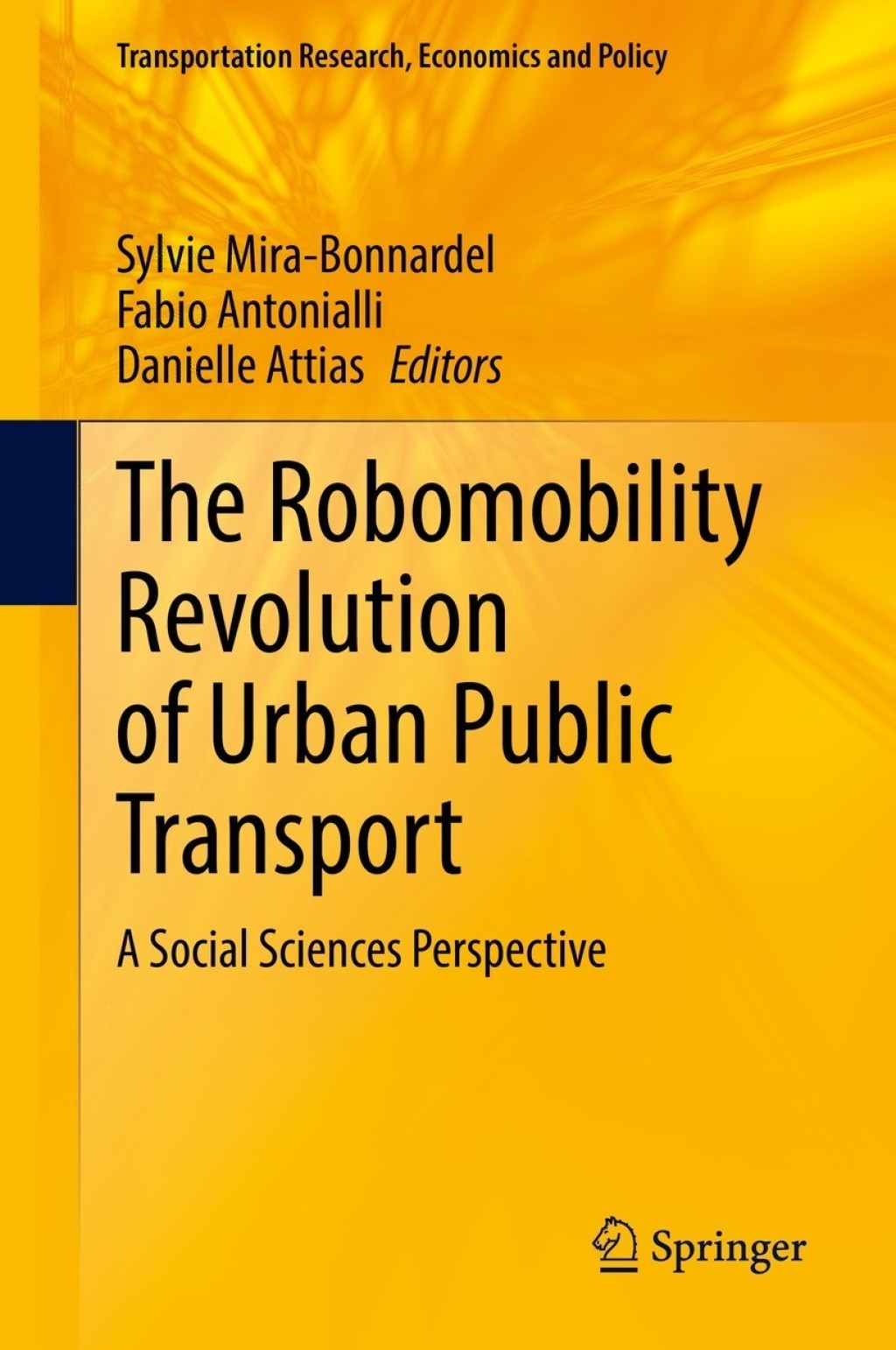
Over the past two decades, society has been witnessing how technological, political, and societal changes have been transforming individual and collective urban mobility. Driven both by newcomers and traditional players, by disruptive as well as incremental innovations, the main objective now is to enhance mobility and accessibility while, reducing vehicle ownership, congestion, road accidents, and pollution in cities. This transformation has been mainly enabled by the widespread adoption of internet-connected devices (e.g.: smartphones and tablets) and by the innovative business models, technologies, and use-cases that arose from this rapid digitalization, such as peer-to-peer, and two-sided markets providing several mobility schemes: car-sharing, car-pooling, bike sharing, free-floating (cars, bikes, electric scooter), ridesharing and ride hailing either for long distances as well as for urban and micro-mobility. The book presents – in a holistic perspective – howthis revolution is happening and what are the major cornerstones for the implementation of robomobility. It aims at answering several substantial issues, such as: What is robomobility and what does it imply for the different stakeholders of the public transport ecosystem? How do policy makers integrate this innovation and how ready the regulations are? How do citizens take part in this transformation? What is the level of user acceptance for this new type of mobility? What are its environmental impacts? What is the economic impact of deploying these shuttles in a local ecosystem?